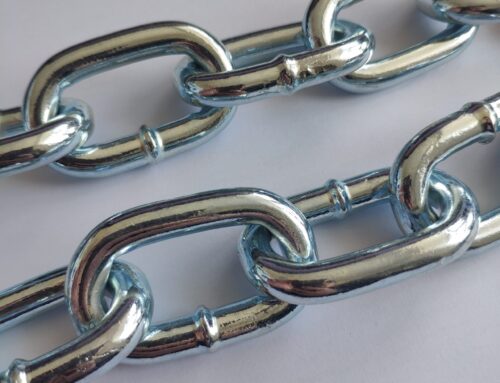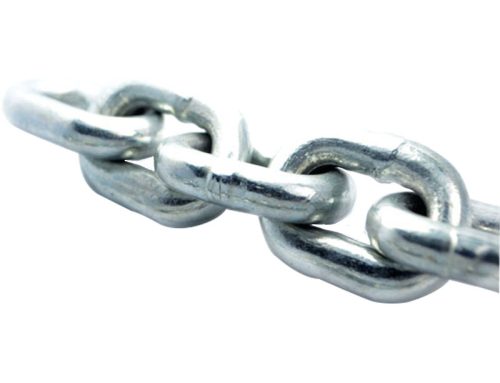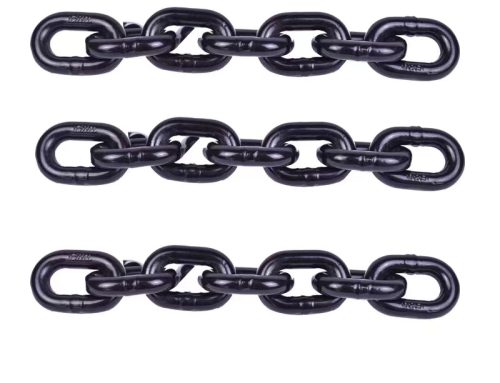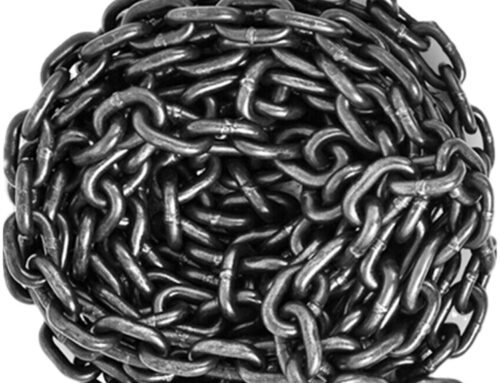
Chains are indispensable in various industries and everyday applications. Encyclopaedia Britannica defines a chain as a series of links, usually made of metal, joined together to form a flexible connector for various purposes such as holding, pulling, hoisting, hauling, conveying, and transmitting power. The simplest and oldest type of chain, known as the coil chain, remains in use today for a multitude of tasks. Chains are categorized into different grades based on their tensile strength and intended use. This article explores the different chain grades and their applications across various sectors.
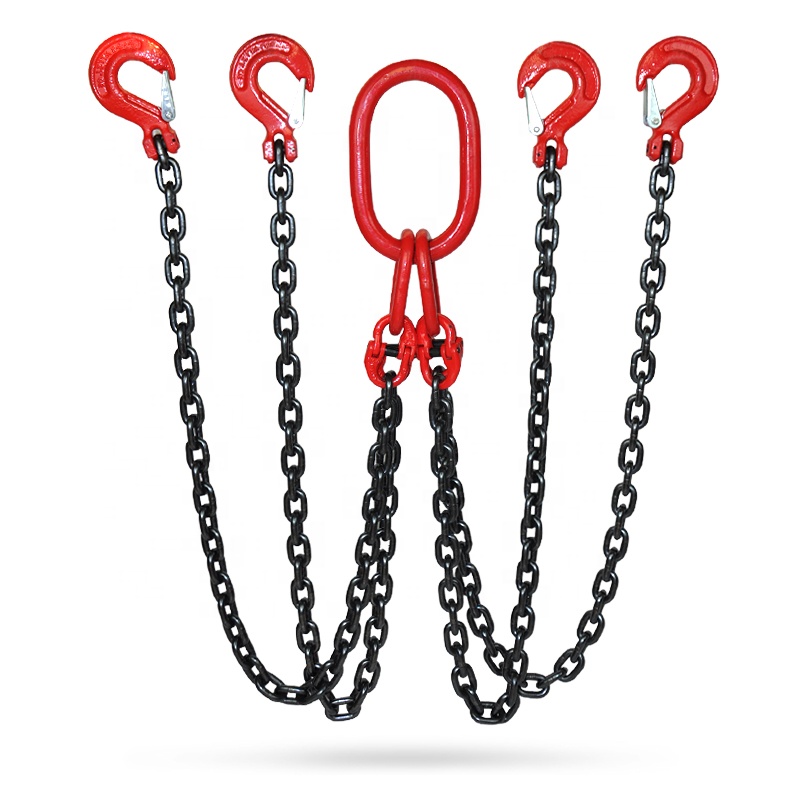
Types of Chain Grades and Their Applications
Grade 30 Proof Coil:
Description: This is a general-purpose chain made from low carbon steel. It is characterized by its standard commercial quality.
Applications: Grade 30 chains are commonly used for tow chains, logging chains, and other general-purpose applications. They are suitable for light-duty tasks where high tensile strength is not a critical requirement.
Grade 40 High Test:
Description: Made from medium carbon steel, Grade 40 chains offer higher tensile strength than Grade 30.
Applications: These chains are typically used in boat windlasses and other marine applications. Their high strength makes them ideal for handling the forces encountered in maritime environments.
Grade 43 High Test:
Description: These chains are made from high carbon steel, providing superior strength and durability.
Applications: Widely used in the trucking industry, Grade 43 chains are utilized for securing loads according to Department of Transportation specifications. They are also used in agriculture and marine applications due to their enhanced strength.
Grade 70 Transport:
Description: Grade 70 chains are high-strength carbon steel chains that are often plated with yellow chromate for better visibility.
Applications: These chains are primarily used in the transportation and construction industries for tie-downs and securing heavy loads. Their high tensile strength makes them suitable for demanding tasks where load security is paramount.
Grade 80 Alloy:
Description: Made from alloy steel and heat-treated for maximum strength, Grade 80 chains are designed for heavy-duty applications.
Applications: This grade is approved for overhead lifting and is used in lifting slings and tow chains. The heat treatment process gives these chains the necessary strength and durability for safe lifting operations.
Grade 100 Alloy:
Description: A relatively recent innovation, Grade 100 chains are made from alloy steel and provide higher strength than Grade 80 chains at certain temperatures.
Applications: These chains are used in critical lifting and rigging applications where superior strength and reliability are essential. They are suitable for use in construction, mining, and other industries that require robust lifting solutions.
Grade 120 Alloy:
Description: Grade 120 chains offer ultra-high strength and are designed for the most demanding lifting and rigging tasks.
Applications: These chains are used in heavy machinery lifting, offshore and marine applications, and the oil and gas industry. They are also employed in mining operations, aerospace, and infrastructure construction due to their exceptional durability and strength.
Special Chain Types and Their Uses
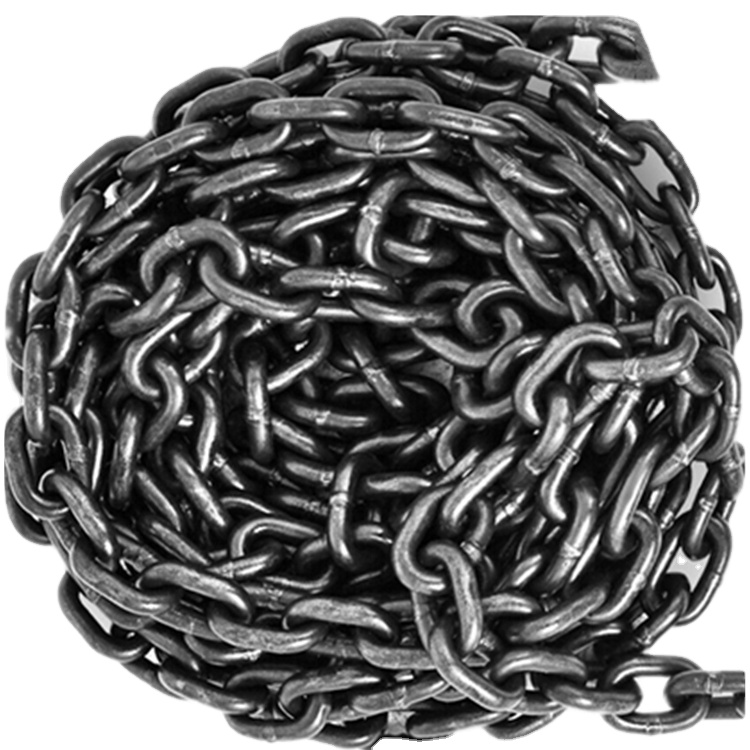
Coil Chains:
Description: Coil chains are made from small, straight metal bar pieces bent into an oval shape, looped together, and welded shut.
Applications: These chains are used in pulleys and were historically used in slings, cranes, and power shovels. They are now often replaced by wire ropes and cables but remain in use for specific tasks requiring flexibility and strength.
Stud-Link Chains:
Description: These chains feature a bar or stud across the links to prevent fouling or kinking.
Applications: Stud-link chains are commonly used in marine environments, particularly for anchoring ships and marine vessels due to their ability to handle high loads without tangling.
Understanding the different chain grades is essential for selecting the right chain for specific applications. Each grade offers unique properties and strengths tailored to various tasks, from general-purpose towing and securing to critical lifting and heavy-duty rigging. By choosing the appropriate chain grade, industries can ensure safe and efficient operations, whether in construction, transportation, marine, or other sectors.